


05 Oct Conscious Breathers : What dolphins teach us about presence?
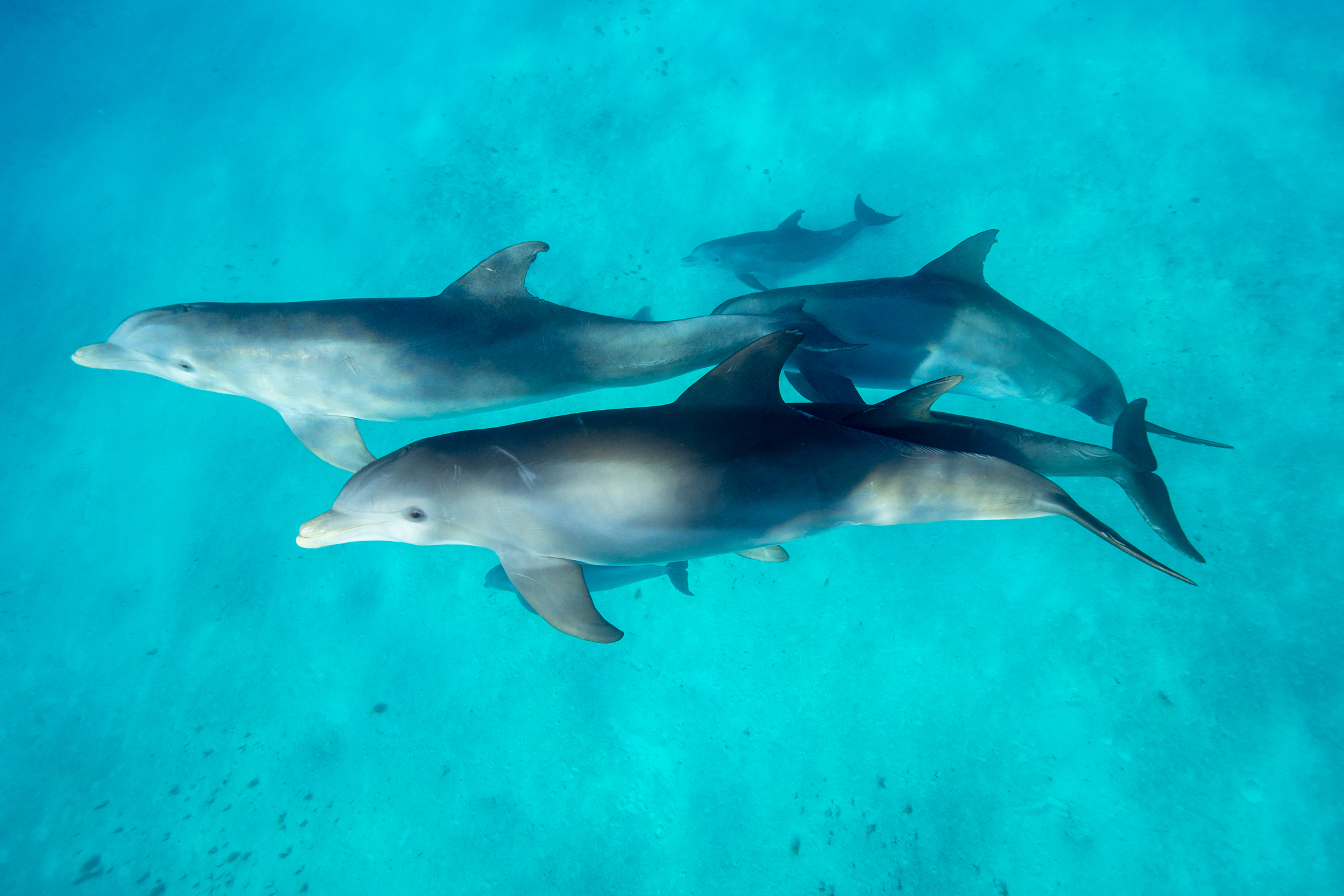
Dolphins are conscious breathers: every breath is a voluntary decision, so they sleep one half of the brain at a time (unihemispheric sleep). When we swim with wild dolphins, snorkelling makes us conscious breathers too, bringing us into a calmer, more present state where real connection becomes possible.
Sentient and deeply receptive
Dolphins are sentient beings, deeply receptive to everything around them: sound, pressure, presence, and whatever we bring into the water with us. And something happens the moment we enter their world.
They don’t just tolerate our presence. They register it.
Why do dolphins have to think to breathe?
Dolphins breathe consciously. Their breathing is never automatic: every breath is a decision, which is why they rest one half of the brain at a time, a state known as unihemispheric sleep.
Because dolphins are aquatic, we have to become conscious breathers too. Through a snorkel. Through the breath we hold before a dive. Suddenly, breathing stops being automatic. We notice it. We manage it. There is no choice in the matter: the moment you put your face below the surface, breath becomes something you do, not something that simply happens.
On land, breath runs quietly in the background of our lives. In the water, it moves to the foreground. We borrow that condition for a few hours, and it changes us.
This shift is not incidental
Why do respectful encounters with dolphins feel different?
Some encounters with wild dolphins feel so different from ordinary ones. Not because of what we see, but because of what happens inside us the moment our own breathing becomes conscious.
A regulated breath changes our state. Calmer. More present. Less reactive. And an animal as receptive as a dolphin meets us differently when we arrive that way.
We don’t just watch them differently. We arrive differently
Two worlds, one shared presence
We come from fundamentally different worlds. Dolphins are aquatic beings, shaped by sound. We are land beings, shaped by sight. Each species carries its own culture, its own way of perceiving, its own way of feeling the world.
No amount of thinking can bridge that distance. We cannot reason our way into a dolphin’s experience, and they have no reason to reason their way into ours.
But presence can. When we are conscious and present, the encounter stops being something we analyse and becomes something we feel. Attention moves out of the head and into the body: the rhythm of the breath, the pressure of the water, the quiet awareness of being observed by someone who is also being observed.
This is where real connection happens. Not through understanding each other, but through arriving in the same state at the same moment: two species, two cultures, meeting in a presence that needs no translation.
Connection isn’t something we think our way into. It’s something we feel our way into.
That is probably why the most meaningful encounters are never the ones we forced. They are the ones where we arrived quiet enough to be met.
How can we bring conscious breathing back to land?
The ocean doesn’t manufacture this awareness. It simply removes the option of ignoring it. So could we access it without water to remind us?
A few conscious breaths, taken deliberately, do on land roughly what the water does automatically: they pull us out of autopilot and into the present.
I often wonder what would change if I carried that breath into an ordinary day. What would I notice if I paused before answering a request? If my exhale lasted a little longer than my inhale, the way it does before a dive? If I asked myself not what I should do, but what I am actually feeling? I don’t have a tidy answer. Perhaps the question is the point, and each of us will meet it differently.
The tool was never the ocean. The ocean was only a reminder.
What this might really be teaching us?
Maybe the most meaningful thing dolphins teach us isn’t about them at all. Maybe it’s about a version of ourselves that shows up more easily near them, present and quietly attentive, and why it doesn’t show up more often everywhere else.
Dolphins have been practising that for millions of years. Every breath a choice. Every encounter, on their terms. We only have to remember how.
With gratitude to Wild Quest
A heartfelt thank you to WildQuest, for offering the space and the possibility for these moments to exist, for every being who comes to visit. Here, people are given the time and the calm to arrive, to breathe and to be present, and the dolphins are given the freedom to choose. That is what makes real connection possible, and it is a rare gift to offer. Thank you.
Stéphanie Huguenin-elie,
Founder of Dolphin Whisper and advocate of ethical dolphin encounters.
Frequently asked questions ?
Do dolphins have to think to breathe?
Yes. Dolphins are voluntary, or conscious, breathers: every breath is a deliberate decision to rise, break the surface and breathe. This is why they never fully lose consciousness.
How do dolphins sleep?
One half of the brain at a time, a state known as unihemispheric sleep. One hemisphere rests while the other stays alert, keeping the body moving, surfacing to breathe and aware of its surroundings.
Why do respectful encounters with wild dolphins feel so different?
Often because of what happens inside us. Snorkelling and breath-holding make our own breathing conscious, which can bring us into a calmer, more present and less reactive state. An animal as receptive as a dolphin meets us differently when we arrive that way.

No Comments