



14 Jun Harmonious encounters with dolphins – On the water rules
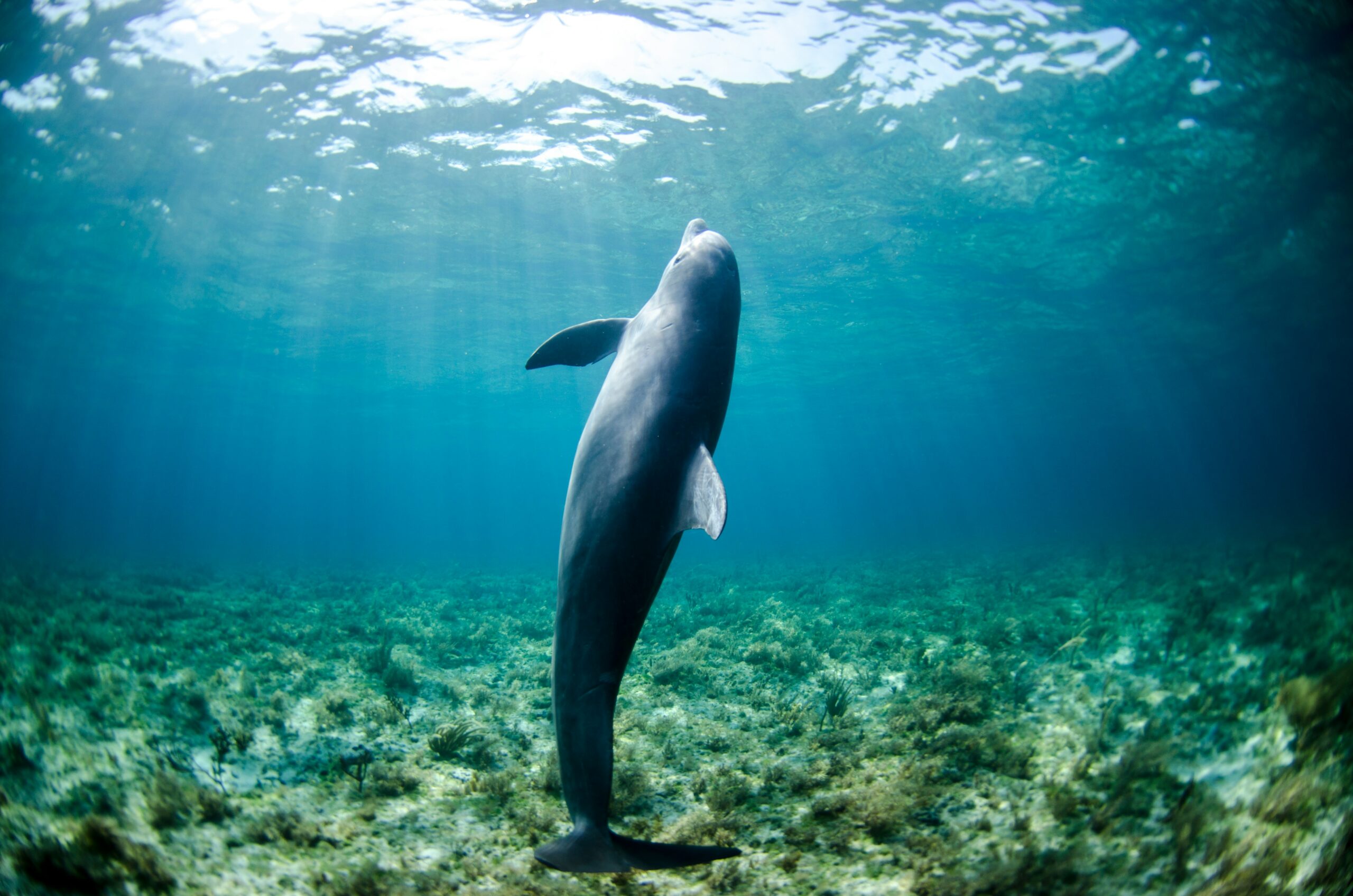
There is a moment that stays with you long after the boat returns to shore. A dolphin appears beside you, close, unhurried, moving through the water with a kind of ease that makes everything else go quiet.
It is not something you can plan for. And it is not something you can force.
What most people don’t realise is that this moment doesn’t begin when the dolphin arrives. It begins much earlier, in the way you approach, in the energy you carry onto the water, in the choices you make before you even see a fin on the horizon.
Out here, every action creates an impact. And the quality of what you experience depends entirely on how you show up.
You Are Entering Their World
The ocean is not a backdrop for human experience. It is a living, complex environment — and dolphins belong to it completely.
When we enter their space, we are guests. Uninvited ones, at that. Dolphins are not waiting for us. At any given moment, they are hunting, resting, travelling, or socialising. Every behaviour serves a purpose. Every hour of their day carries a biological cost.
Our presence, however gentle, however well-intentioned, changes that balance. This is not a reason to stay away. It is a reason to arrive differently.
Why These Rules Exist
Respectful dolphin interaction is not intuitive. It is learned.
Science has shown something important: even when boats follow basic regulations, dolphins can modify their behaviour, increase their energy expenditure, and reduce time spent on essential activities like feeding and resting. The cumulative effect of repeated encounters even responsible ones has real consequences on their health and wellbeing over time.
This is why precise on-the-water rules exist. Not to restrict the experience, but to protect it for them, and for you.
How to Approach
The way you approach dolphins determines everything that follows.
– From 100 metres out, speed drops to 5 knots.
– The boat moves parallel to the group, slightly behind — never head-on, never cutting across their path.
– At 50 metres, if dolphins come closer, the engine goes off.
– If they move away, you let them go. You never follow.
– No more than three boat on the
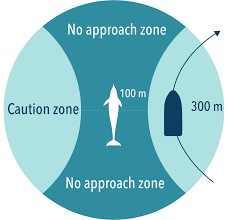
Distance is not a limitation. It is what allows dolphins to feel safe enough to choose proximity on their terms, not ours
Observe Before You Act
Before any movement toward a group, the first step is simply to watch.
– What are they doing?
– Are there calves present?
– Are they hunting, resting, or travelling with purpose?
This matters more than most people realise, because one principle overrides everything else: if dolphins are feeding, resting, or moving with clear direction, you do not initiate interaction. These are not optional moments. They are essential for survival, and no encounter is worth interrupting them.
What Your Energy Brings to the Water
In-water encounters are a different kind of experience and a more demanding one. When managed poorly, they can quickly become intrusive, both for the dolphins and for the people involved.
This is why some operators have made the deliberate choice not to offer this option at all, prioritising the safety of their guests and the wellbeing of the animals over the appeal of a closer encounter.
Dolphins perceive far more than movement and sound. These animals possess an extraordinary sensitivity to energetic and emotional states. They respond not just to what you do, but to what you carry your urgency, your expectations, the quality of your attention.
Arriving with impatience creates disturbance before you even move. Arriving with presence calm, open, without agenda creates the conditions for something real to happen.
This is why the preparation begins before you reach the water.
• Breathe.
• Observe.
• Release the need to make something happen.
You are not here to take an experience. You are here to meet one.
Extra Care When Calves Are Present
When young dolphins are in the group, everything becomes more careful. Calves are vulnerable, curious, and entirely dependent on their mothers. The bond between them is critical, and any disruption to it carries real consequences — not just in the moment, but over time.
The rules are clear and non-negotiable:
• No water entry.
• Minimum distance: 75 metres.
• Observation only.
• Shortened time near the group — 15 to 25 minutes maximum.
These are not suggestions. They are the baseline of responsible behaviour when young animals are present.
Learning to Read What Dolphins Are Telling You
Dolphins are always communicating. Part of what it means to be a responsible observer is learning to see it.
Signs of comfort
• Fluid, relaxed swimming.
• Voluntary approach toward the boat out of genuine curiosity.
• Playful social interactions within the group.
Signs of stress
• Abrupt direction changes.
• Rapid or irregular breathing.
• Tail slapping.
• Moving away and not returning.
If stress appears, you create distance. Immediately. Respect is not just about the rules you follow at the start of an encounter. It is measured in how quickly you respond when something shifts.
They Decide
This is the one principle that holds everything together.
Dolphins choose the interaction. Not the boat, not the guide, not you.
When you truly allow that, when you stop trying to make something happen and simply remain present something different becomes possible. Not an activity. Not a performance. A real encounter.
And sometimes, the most powerful moment is the one where nothing happens and you choose to respect that silence.
The future of these interactions depends on one simple, repeated choice: do we seek connection, or control? Because only one of these creates harmony.
Written by Stéphanie Huguenin-elie,
Marine guide and founder of Dolphin Whisper.
With years of experience observing dolphins in the wild, I share a conscious approach to human–dolphin encounters based on respect and understanding

No Comments